
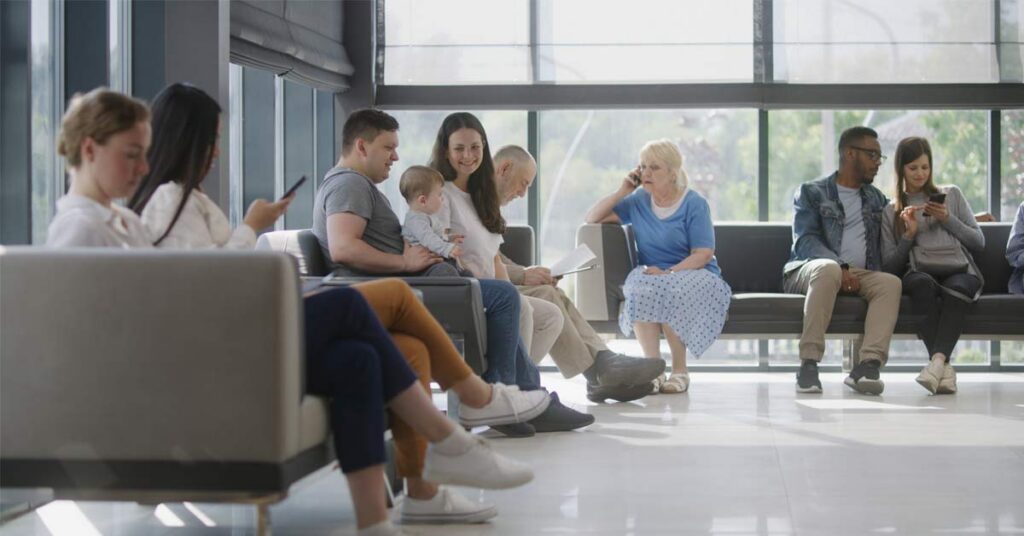
Missed appointments cost your practice time, money, and patient care.
If you’re trying to figure out how to reduce no-shows, you’re not alone.
Many practices rely on automated text reminders to keep patients on schedule.
Text reminders can help, but they don’t solve the problem on their own. Patients ignore them, forget about them, or cancel without rescheduling. The result is the same: empty appointment slots and lost revenue.
Reducing no-shows usually takes more than automation. It takes consistent follow-up and live conversations with patients who might otherwise fall through the cracks.
The Real Cost of a No-Show
It’s easy to overlook a missed appointment now and then. But the losses add up quickly.
A practice with 20 daily appointments and a 15% no-show rate loses about three visits a day. At $150 per visit, that’s $450 lost before lunch.
Over a year, that can add up to more than $100,000 in missed revenue.
The cost isn’t just financial. Every empty slot is a patient who didn’t receive care and may never reschedule.
Why Text Reminders Don’t Solve the Problem
Automated texts can help patients remember appointments. But they have clear limits when it comes to actually changing patient behavior.
1. Patients ignore them
Studies show that more than half of healthcare text reminders are never opened.
2. They can’t answer questions
If a patient feels unsure, nervous, or short on time, they won’t respond to a text. And they may not show up to the appointment.
3. They don’t easily rebook appointments
If a patient cancels by text, most systems don’t offer a new time right away. The patient disappears from the schedule.
4. They feel impersonal
A text reminder feels automated. It doesn’t show patients that your practice values their care.
A text asks patients to remember an appointment. A real phone call gives them a reason to keep it.
What Live Voice Recalls Actually Do
A patient recall is a real phone call made by a real person. These calls reach out to patients who missed an appointment, canceled, or haven’t been seen in a while.
When done well, recalls can be one of the most effective tools a practice has.
A live caller can answer questions, address concerns, and schedule a new appointment during the same conversation. They can hear hesitation in a patient’s voice and respond right away. That type of interaction isn’t possible through a text message.
Studies show that combining live phone outreach with automated reminders can significantly reduce no-show rates compared to reminders alone.
There’s also a relationship factor. Patients who feel cared for by their provider’s office are more likely to stay engaged with their care. A warm, professional phone call helps strengthen that connection.
The Problem: Your Team Doesn’t Have Time
This is where most practices struggle.
Making 20 to 30 recall calls every day takes time and focus. It also requires follow-up when patients don’t answer.
Your front desk staff already handles check-ins, phone calls, insurance questions, and a waiting room full of patients. Recall calls get pushed aside until there’s a free moment.
That free moment rarely comes.
Calls get delayed. Follow-ups don’t happen. Patients who could have been rescheduled slip through the cracks.
This isn’t a staffing failure. It’s a capacity problem.
How Oclinicals Helps Reduce No-Shows
Oclinicals provides trained virtual staff who handle live patient outreach for your practice.
Our callers don’t read from a script. They have real conversations with patients, answer questions, and schedule new appointments on the same call.
They can also work directly inside your scheduling system while your front desk team focuses on the patients already in your office.
Every call gets documented. Every missed call gets a follow-up. Nothing falls through the cracks.
You can keep automated texts for same-day reminders. Then add live voice recalls to handle missed appointments and inactive patients.
Together, these tools create a system that actually helps fill your schedule.
A Smarter Way to Reduce No-Shows
If you’re wondering how to reduce no-shows, the problem usually isn’t a lack of reminders. Most practices already have them. What’s missing is consistent follow-up.
A real conversation can answer questions, address concerns, and help patients reschedule before the appointment is lost. That connection often makes the difference between a missed visit and a completed one.
Automated reminders still play an important role. But when you combine them with live patient outreach, your schedule becomes much more stable.
If your no-show rate keeps climbing or your team doesn’t have time to follow up, it’s time for a different approach.
Schedule a free consultation to see how live patient outreach can help fill your schedule.